Scott 3200A Tailwheel – Fully Rebuilt: Heavy-Duty General Aviation Tailwheel Assembly
Scott 3200A Tailwheel – Fully Rebuilt: Heavy-Duty General Aviation Tailwheel Assembly
Blog Article
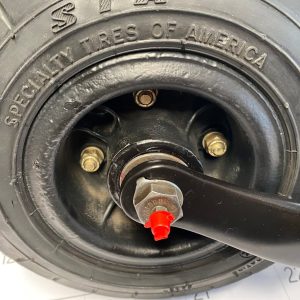
The Scott 3200A Tailwheel – Fully Rebuilt provides aircraft owners, pilots, maintenance facilities, and restoration specialists with a renewed tailwheel solution developed for compatible conventional-gear aircraft. Clear rebuild records help aircraft owners and maintenance professionals evaluate the tailwheel before installation.
A correctly rebuilt Scott 3200A Tailwheel Assembly can support predictable steering when installed and adjusted properly on a compatible aircraft. A Scott Tailwheel Assembly should be evaluated as a complete mechanical system rather than judged only by its tire, fork, paint, or visible exterior hardware.
An Aircraft Tailwheel Assembly supports the rear of a conventional-gear airplane and contributes to directional control throughout ground operations. A General Aviation Tailwheel may be used on training aircraft, classic taildraggers, bush airplanes, utility platforms, experimental aircraft, and restored vintage designs.
Whether the requirement is an Aircraft Tailwheel, Taildragger Tailwheel, Aviation Tailwheel System, or Tailwheel Steering Assembly, exact compatibility should guide the purchase.
Overview of the Fully Rebuilt Scott 3200A
The assembly can respond to normal steering input while allowing broader movement when its internal mechanism releases appropriately. A system-level evaluation can identify the true cause of binding, looseness, poor centering, irregular tire wear, or inconsistent ground control.
Scott 3200A Tailwheel Assembly Features
Suitable internal clearances and secure steering components contribute to consistent performance. A rebuilt unit may include inspected housings, renewed bearings, replacement bushings, serviced steering components, fresh lubrication, suitable hardware, and adjusted internal parts.
Evaluating a Rebuilt Scott Tailwheel Assembly
Correct lubrication and careful reassembly help restore smooth movement and reduce unnecessary wear. A freshly painted assembly may still contain worn bearings, weak springs, excessive clearances, or damaged steering components when no true rebuild was completed.
Aircraft Tailwheel Assembly Operation
Tailwheel condition influences taxi tracking, turning ability, maneuverability, and pilot workload. The tail spring and steering linkage strongly affect how the assembly responds to pilot input.
Benefits of a General Aviation Tailwheel
Grass, gravel, and dirt can introduce moisture, abrasive particles, vegetation, and debris into moving areas. Experimental aircraft installations should be evaluated according to the builder’s configuration and applicable operational requirements.
Aircraft Tailwheel Steering Performance
Its geometry, tire condition, fork alignment, steering arrangement, and internal condition can influence ground behavior. The axle and bearings should be included in routine maintenance and rebuild inspection.
Taildragger Ground Handling
A responsive and correctly adjusted tailwheel can contribute to predictable taxiing and controlled turning. Pilots should avoid unnecessary mechanical stress while using operating techniques appropriate to the aircraft and surface.
Understanding an Aviation Tailwheel System
A problem in one area can create symptoms elsewhere in the installation. Excessive slack can delay steering response, while excessive tension may restrict movement or overload components.
Tailwheel Steering Assembly Performance
The mechanism should respond smoothly without sticking, harsh engagement, excessive delay, uncontrolled release, or irregular centering. Hardware should remain secure, correctly sized, and appropriate for the assembly.
Benefits of an Aircraft Ground Handling Tailwheel
Reliable ground handling begins with a serviceable assembly and a correctly adjusted installation. Responsible ground movement protects the Aircraft Ground Handling Tailwheel and surrounding structure.
Scott 3200 Tailwheel Applications
Operators may value the availability of maintenance experience and replacement components for suitable configurations. Model identification should be supported through reliable references and qualified review.
Maintaining a Heavy-Duty Aircraft Tailwheel
The tailwheel should match the aircraft’s suitable configuration, tail load, geometry, and operating environment rather than being selected from appearance alone. Preventive maintenance supports reliable Heavy-Duty Aircraft Tailwheel operation.
Maintaining Tailwheel Components
Correct Tailwheel Aircraft Parts protect the integrity and performance of the rebuilt assembly. Systematic inspection supports dependable long-term performance.
Aircraft Steering Tailwheel Performance
An Aircraft Steering Tailwheel helps direct the airplane during taxi by responding to the rudder-linked steering arrangement. Maintenance personnel should inspect steering arms, springs, chains, fork structure, wheel condition, and mounting points after significant events.
Buying a Replacement Aircraft Tailwheel
The rebuilt Scott 3200A should be compared with both the existing installation and the intended aircraft configuration. The unit should not be installed solely because it appears clean or freshly refinished.
Choosing General Aviation Landing Gear Parts
Each component contributes to aircraft support, ground control, steering, braking, or load absorption. The product description should explain whether components are rebuilt, repaired, serviced, inspected, untested, or sold for parts.
Inspecting a Fully Rebuilt Scott 3200A
A detailed inspection reduces uncertainty and supports a more informed transaction.
- Request photographs of the front, rear, sides, wheel, fork, steering arms, mounting area, identification marks, and loose components.
- Confirm whether retained components passed inspection and whether replacement parts were appropriate for the assembly.
- Retain all purchase and rebuild records with the appropriate aircraft maintenance information.
Installing the Scott 3200A Tailwheel
Professional installation helps protect both the rebuilt Scott 3200A and the aircraft structure. Swivel engagement, release, centering, and directional action should operate consistently.
Pilots should report delayed steering, pulling, vibration, noise, binding, or irregular swivel behavior.
Long-Term Scott 3200A Care
Aircraft operating from dirt, grass, gravel, mud, or backcountry strips may require more frequent attention. Changes in taxi handling should be documented and reported.
Corrosion protection may be especially important in humid, coastal, agricultural, outdoor-storage, or wet operating environments.
Scott 3200A Tailwheel Conclusion
The Scott 3200A Tailwheel – Fully Rebuilt can provide a dependable replacement option for Aircraft Ground Handling Tailwheel compatible aircraft when its rebuild quality, condition, configuration, and documentation are verified. Careful technical and commercial evaluation can reduce compatibility problems, repeated repairs, project delays, and unexpected costs.
Whether the aircraft operates from pavement, grass, gravel, dirt, private strips, utility fields, or backcountry airfields, the tailwheel should match the actual aircraft and operating environment. With verified compatibility, correct installation, professional steering adjustment, suitable lubrication, and routine inspection, the assembly can provide dependable long-term value.
Report this page